

Climate change poses major challenges for island nations like Fiji. As a result, innovative models are emerging for how communities can become more resilient and how tourism can actively contribute to environmental protection. Fiji is adopting positive approaches in its tourism sector: through sustainable projects, social entrepreneurship, and campaigns like "Loloma Hour," the island nation is creating ways for tourism to not only consume but also actively contribute to climate resilience.
#1 Hiking that connects: Talanoa Treks as a bridge between villages and guests
Those who associate Fiji only with turquoise waters will be surprised in the highlands: Lush forests, grassy hills, and river valleys characterize the scenery that outdoor enthusiasts experience on Talanoa Treks' tours. Marita and Matt Manley, two Brits who have lived in Fiji since 2006, have developed a model that actively involves villages. Every tour is planned and implemented jointly with the villages, and the proceeds go directly to local projects. "Talanoa means 'telling,' 'listening,' and 'exchanging ideas' in Fijian, and that's exactly what we're about," says co-founder Marita Manley. Those who travel with Talanoa Treks share meals with families, drink kava with village elders, and experience firsthand how important community is in the daily lives of the islands. Tourism thus becomes a source of income and a platform for keeping cultural knowledge alive.

#2 Underwater World in Transition – and a Shark Whisperer as a Beacon of Hope
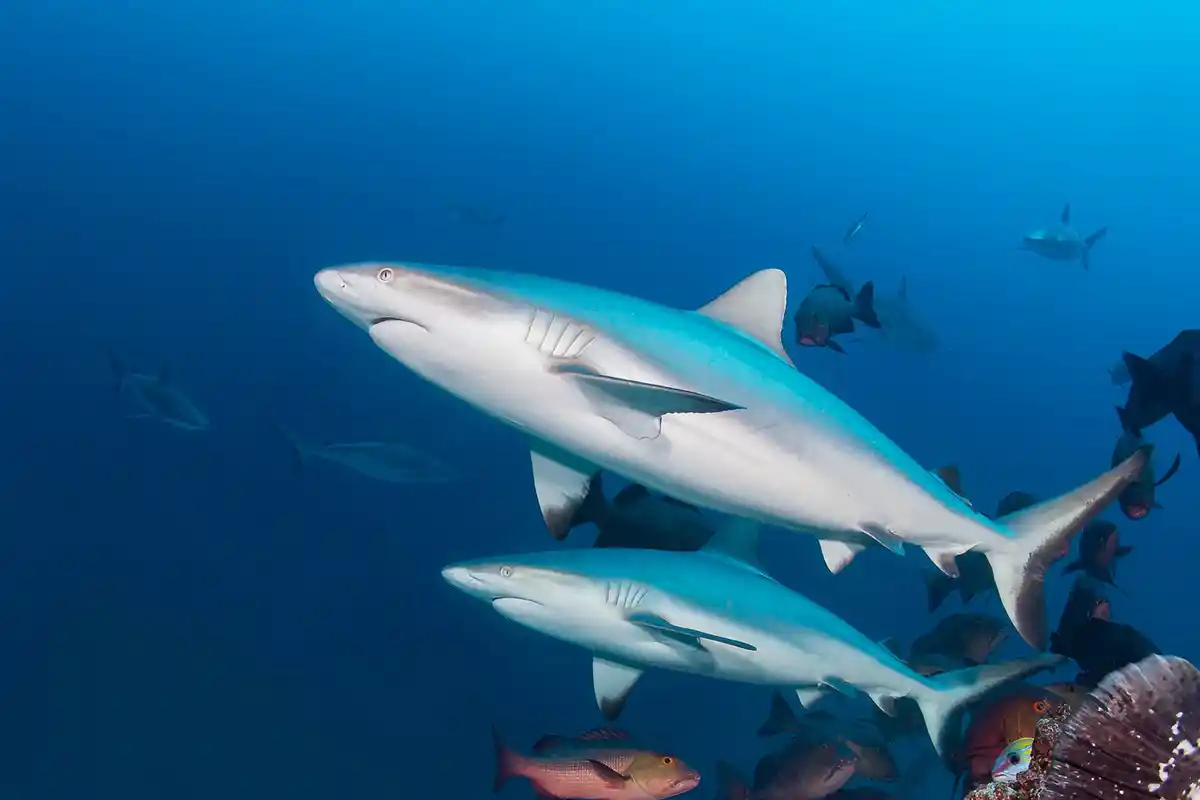
In Fiji, you can encounter up to eight species of sharks, without cages, but with respect and decades of experience. Diving pioneer Brandon Paige, operator of AquaTrek in Pacific Harbour, is considered a “shark whisperer.” His dives raise visitors’ awareness of the importance of these animals in the ecosystem and have been internationally recognized with the Skål Ecotourism Award and the Tourism for Tomorrow Award. Since 1999, Paige has been committed to protecting sharks and demonstrates that sustainable dive tourism can make a direct contribution to preserving the oceans.
#3 Solar Power, Women's Empowerment, and Zero Waste: Nukubati Great Sea Reef Resort. The Nukubati Great Sea Reef Resort, located on one of the world's largest coral reefs, is considered a pioneer of sustainable luxury concepts. Under the direction of Lara Meliki Vokai, the eco-resort relies on solar energy, rainwater harvesting, biological cycles, and local resources. "My mother built this resort 35 years ago, as one of Fiji's first female entrepreneurs. Her courage inspires me to continue sustainability and female empowerment," says Vokai. Close collaboration with villages creates jobs, facilitates knowledge transfer, and provides a model that demonstrates that ecological luxury and community empowerment are not mutually exclusive.
#4 Corals for Conservation: Super Corals Against the Crisis
Climate change is affecting coral reefs worldwide, but pioneering work is taking place in Fiji. The NGO Corals for Conservation, founded by coral researcher Austin Bowden-Kirby, is cultivating heat-resistant "super corals" that can better withstand rising temperatures. "Corals give people hope, and we need that hope right now,", says Bowden-Kirby. Together with fishing villages and hotels, protected zones are being established, coral reefs are being replanted, and with the Coral Gardener program, a new profession has even been created.Coral Gardener They recently received prominent support from Chris Hemsworth and Matt Damon, who planted new corals on Malolo Island together with the Coral Gardeners.
#5 Loloma Hour: The World's First Happy Hour for the Environment & Community With the introduction of the Loloma Hour, Fiji is setting a new international standard in sustainable tourism. Travelers are invited to dedicate one hour of their stay to nature or community projects, such as mangrove planting, beach cleanups, coral reef restoration, or species conservation initiatives. Just one year after its launch, the initiative is already showing results: 12,354 Loloma Hours have already been contributed by guests, hotels, and local communities. This far exceeds the originally targeted 5,000 hours. "Fijians know that happiness comes from sharing. With the Loloma Hour, we give guests the opportunity to become part of this philosophy," says Conny Schütz, Market Manager DACH at Tourism Fiji. Resorts such as Six Senses Fiji, InterContinental Fiji, VOMO Island, Shangri-La Yanuca Island, Jean-Michel Cousteau Resort, Kokomo Private Island and Nukubati are already participating.
The prevalence of climate protection in Fiji is underscored by the awarding of the "Alternative Nobel Prize" this fall. Thanks to students from Fiji, the International Court of Justice declared a clean environment a human right. The Pacific Islands Students Fighting Climate Change (PISFCC) was honored with this award for their efforts. It symbolizes something that also comes alive for travelers in Fiji: collective, legally grounded action against the global consequences of climate change, not as a last-ditch, desperate reaction, but as a strategic, positive initiative. Those who travel to Fiji not only experience natural paradises but also become part of a movement that inspires hope.






 English
 Deutsch
 Français
 Español
 Italiano


